Carol of the Bells Sheet Music: A Comprehensive Guide (Piano PDF)
Discover a wealth of Carol of the Bells piano sheet music in PDF format, ranging from beginner-friendly, color-coded versions to advanced arrangements for skilled pianists.
Explore digital downloads from platforms like Etsy, GIA Publications, and Michael Kravchuk, offering diverse difficulty levels and unique features for learning this classic tune.
Historical Background of Carol of the Bells
“Carol of the Bells” boasts a fascinating history, originating not as a Christmas carol, but as a Ukrainian folk chant known as “Shchedryk.” This ancient song dates back centuries, traditionally sung during the New Year season to bring blessings of prosperity and good fortune. The lyrics, reflecting wishes for a bountiful harvest, were deeply rooted in Ukrainian pagan traditions.
Mykola Leontovych, a Ukrainian composer, meticulously arranged “Shchedryk” for choir in 1914, creating the iconic melody we recognize today. Peter J. Wilhousky adapted Leontovych’s work into English in 1936, replacing the original lyrics with the now-familiar Christmas-themed verses. This adaptation propelled the song to international fame, becoming a beloved staple of the holiday season, and inspiring countless piano arrangements and sheet music versions.
The enduring popularity of “Carol of the Bells” speaks to its captivating melody and universal themes of hope and celebration.
The Ukrainian Origins: “Shchedryk”
“Shchedryk,” the original Ukrainian folk chant, holds a significant place in the cultural heritage of Ukraine. The word “shchedryi” translates to “generous” or “bountiful,” reflecting the song’s purpose – to wish prosperity and good fortune upon those it was sung to. Traditionally, groups of singers, often children, would go door-to-door during the New Year season, performing “Shchedryk” in exchange for treats.
Unlike modern Christmas carols, “Shchedryk” wasn’t initially associated with Christmas. Its roots lie in pre-Christian winter solstice traditions, celebrating the return of longer days and the promise of a fruitful year. The repetitive, bell-like melody mimics the ringing of sleigh bells and symbolizes the joyous anticipation of the New Year. Mykola Leontovych’s masterful arrangement preserved the essence of this ancient tradition, paving the way for its global recognition.
Mykola Leontovych: Composer Biography
Mykola Leontovych (1877-1921) was a prominent Ukrainian composer, conductor, and teacher. Born in the Podolia region of Ukraine, he dedicated his life to collecting and arranging Ukrainian folk songs, elevating them to a higher artistic level. He studied music in Saint Petersburg and Kyiv, becoming deeply involved in Ukrainian musical life.
Leontovych is best known for his polyphonic settings of Ukrainian folk melodies, most notably his arrangement of “Shchedryk,” which became “Carol of the Bells.” He skillfully layered harmonies and rhythms, transforming a simple chant into a complex and captivating choral work. Tragically, Leontovych’s life was cut short during the Ukrainian War of Independence; he was murdered by Bolshevik agents. His legacy, however, lives on through his enduring compositions, including the globally beloved “Carol of the Bells.”
Adaptation to English and Popularity
“Shchedryk,” Leontovych’s original composition, gained international recognition through the efforts of Ukrainian composer and conductor Peter Wilhousky. In 1936, Wilhousky adapted “Shchedryk” into the English-language “Carol of the Bells,” retaining the distinctive melodic and harmonic structure but adding new lyrics.
This adaptation quickly gained popularity in the United States, becoming a staple of Christmas celebrations. Its widespread use in popular culture, including featured appearances in films and television, cemented its status as a beloved holiday classic. Consequently, demand for sheet music, including piano arrangements, surged, leading to numerous editions catering to various skill levels. The song’s enduring appeal continues to drive interest in learning and performing it on the piano today.
Finding Carol of the Bells Sheet Music for Piano
Locate piano sheet music for “Carol of the Bells” through digital platforms like Etsy, GIA Publications, and Michael Kravchuk, offering diverse arrangements in PDF format.
Digital Download Options
Numerous online resources provide instant access to Carol of the Bells sheet music in convenient PDF format. This eliminates shipping costs and allows musicians to begin practicing immediately. Platforms specializing in digital sheet music offer a wide selection, catering to various skill levels and preferences.
Popular choices include marketplaces like Etsy, where independent sellers offer unique arrangements, often including color-coded notes and letter names for beginners. GIA Publications provides professionally arranged piano 4-hands versions, ideal for duets. Michael Kravchuk offers free piano arrangements at varying difficulty levels – easy, intermediate, and advanced – all available for download.
These digital options present a cost-effective and accessible way to acquire sheet music, empowering pianists to enjoy and master this beloved holiday classic.
Etsy: Beginner & Color-Coded Versions
Etsy emerges as a fantastic resource for beginner pianists seeking Carol of the Bells sheet music. Many sellers specialize in simplified arrangements designed for those new to the instrument. A standout feature frequently offered is color-coding, where each note corresponds to a specific color, aiding in quick recognition and learning.
These versions often include letter names directly on the sheet music, further simplifying the reading process. Specifically, a right-hand-only arrangement is available, focusing on the melody and making it manageable for young learners. Finger numbers are commonly included, guiding proper hand positioning.
These visually intuitive PDFs transform learning into a fun and accessible experience, especially for children embarking on their musical journey with this cherished holiday song.
GIA Publications: Piano 4-Hands Arrangements
GIA Publications provides a compelling option for those seeking a collaborative piano experience with their Carol of the Bells sheet music. They offer a digital download of a piano 4-hands arrangement, specifically within the “Christmas Fantasia” collection by Heather Sorenson. This arrangement is ideal for a teacher and student duet, or for two pianists of similar skill levels.
The digital format allows for immediate access and convenient printing. This arrangement presents a richer harmonic texture and a more complex musical experience compared to solo arrangements.
GIA’s offering, identified by ISBN 9780787743994, provides a beautifully crafted arrangement suitable for intermediate to advanced players looking to expand their repertoire and enjoy a shared musical performance.
Michael Kravchuk: Multiple Difficulty Levels
Michael Kravchuk offers a fantastic resource for pianists of all levels seeking Carol of the Bells sheet music in PDF format. His website provides free piano arrangements categorized into three distinct difficulty levels: Easy, Intermediate, and Advanced. This tiered system allows players to select music perfectly suited to their current skill set and progressively challenge themselves.
The “Easy” version is excellent for beginners, while the “Intermediate” arrangement provides a step up in complexity. For seasoned pianists, the “Advanced” arrangement offers a more intricate and demanding musical experience.
Kravchuk’s site also features additional piano sheet music and free online piano lessons, making it a comprehensive resource for learning and enjoying this beloved holiday tune.

Sheet Music Difficulty Levels
Explore a spectrum of Carol of the Bells piano sheet music, from beginner one-handed versions to complex arrangements, catering to diverse skill levels and preferences.
Beginner Piano Arrangements
For aspiring pianists, beginner arrangements of “Carol of the Bells” prioritize simplicity and accessibility. These versions often focus on the right-hand melody, omitting complex harmonies or left-hand accompaniments initially. Etsy provides excellent options, including sheet music with color-coded notes and letter names directly on the staff – a fantastic visual aid for learning.
These arrangements are designed to build confidence and familiarity with the tune. Finger numbers are frequently included, guiding proper hand positioning. Some beginner sheets are even specifically designed for one-handed playing, allowing students to focus solely on the melody. The goal is to make the beautiful melody of “Carol of the Bells” achievable and enjoyable for those just starting their piano journey, fostering a positive learning experience.
One-Handed Beginner Versions
Specifically tailored for absolute beginners or those learning to coordinate both hands, one-handed arrangements of “Carol of the Bells” offer a simplified entry point. These versions isolate the iconic melody, typically presented for the right hand, allowing focused practice without the added complexity of accompaniment. Etsy emerges as a key resource, showcasing Grade 0 beginner piano sheets designed with this approach in mind.
The inclusion of color-coded notes, letter names, and finger numbers further enhances the learning process, making it visually intuitive and reducing the cognitive load. This method allows students to internalize the melody and develop finger dexterity before tackling two-handed coordination. It’s an excellent stepping stone towards mastering the full arrangement, building confidence and musicality along the way.
Intermediate Piano Arrangements
Intermediate arrangements of “Carol of the Bells” bridge the gap between beginner simplicity and advanced complexity, introducing richer harmonies and more intricate rhythms. These sheet music options typically involve both hands, demanding greater coordination and a more developed understanding of musical notation. Michael Kravchuk provides a valuable resource, offering a free piano arrangement specifically categorized as “Intermediate.”
Expect to encounter more challenging key signatures and time signatures, alongside a fuller realization of the song’s harmonic texture. These arrangements often incorporate broken chords and slightly more complex fingerings, encouraging players to refine their technique and musical expression. They represent a significant step forward, fostering a deeper connection with the piece and preparing students for advanced repertoire.
Advanced Piano Arrangements
Advanced “Carol of the Bells” piano sheet music presents a formidable challenge, demanding a high level of technical proficiency and musical maturity. These arrangements often feature complex harmonies, rapid passages, and intricate ornamentation, pushing the pianist’s skills to their limits. Michael Kravchuk also offers an “Advanced” level arrangement, catering to seasoned performers.
Expect to encounter demanding fingerings, sophisticated voicing, and a full exploration of the song’s dynamic range. These scores require a thorough understanding of music theory and a refined sense of musical interpretation. They are ideal for pianists seeking to showcase their virtuosity and deliver a truly captivating performance of this beloved holiday classic, demanding precision and artistry.
Understanding Piano Sheet Music Notation
Mastering piano sheet music requires understanding treble and bass clefs, key signatures, time signatures, note durations, and rests – essential for playing “Carol of the Bells”.
Reading Music: Treble and Bass Clef
Decoding piano sheet music begins with understanding the treble and bass clefs. The treble clef, often called the G clef, primarily displays higher-pitched notes, typically played with the right hand when learning “Carol of the Bells”.
Conversely, the bass clef, or F clef, represents lower-pitched notes, generally played by the left hand; Recognizing these clefs is fundamental to accurately interpreting the notes on the staff.
Each line and space on the staff corresponds to a specific note. For beginners, associating these lines and spaces with note names (A, B, C, D, E, F, G) is crucial.
Sheet music for “Carol of the Bells”, even simplified versions, utilizes both clefs to create the complete harmonic texture. Practice identifying notes within each clef to build fluency.
Key Signatures and Time Signatures
Understanding key signatures and time signatures is vital when interpreting “Carol of the Bells” sheet music. The key signature, indicated by sharps or flats at the beginning of the staff, tells you which notes are consistently raised or lowered throughout the piece.
For many arrangements of this carol, the key signature will indicate the presence of sharps. The time signature, displayed as two numbers stacked on top of each other, defines the rhythm.
Commonly, “Carol of the Bells” is written in a time signature like 3/4 or 4/4, indicating three or four beats per measure.
These signatures dictate the pulse and structure of the music, guiding your timing and phrasing. Accurately recognizing them ensures a faithful rendition of the carol’s iconic rhythm.
Notes and Rests: Duration and Value
Decoding the duration and value of notes and rests is fundamental to playing “Carol of the Bells” from sheet music. Notes represent sounds, while rests indicate silence. Their shapes determine how long each is held.
Whole notes receive four beats, half notes get two, quarter notes one, and eighth notes half a beat – a pattern crucial for the carol’s rhythmic complexity. Rests mirror these values, signifying periods of silence.
“Carol of the Bells” frequently employs shorter note values, like eighth and sixteenth notes, creating its characteristic bell-like effect.
Mastering these durations and understanding their relationship to the time signature ensures accurate timing and a polished performance of this beloved holiday piece.
Finger Numbers and Hand Positioning
Proper finger numbering and hand positioning are vital for efficiently learning “Carol of the Bells” on the piano. Fingers are numbered 1-5, with 1 being the thumb and 5 the pinky. Sheet music often includes these numbers to guide your finger placement.
Beginner arrangements, especially those with color-coded notes or letter names, frequently indicate fingerings to simplify the learning process. Maintaining a relaxed, curved hand shape promotes agility and prevents strain.
“Carol of the Bells” requires navigating quick passages, so efficient fingerwork is key. Pay attention to suggested fingerings and practice slowly to build accuracy and muscle memory.
Correct hand position allows for smooth transitions and a more expressive performance of this intricate and beautiful piece.

Specific Sheet Music Features
Many piano PDFs offer helpful features like color-coded notes, included letter names, and finger numbering guides, simplifying learning for all skill levels.
Color-Coded Notes for Beginners
Color-coded sheet music is a fantastic resource for beginner piano players tackling “Carol of the Bells.” These arrangements visually link each note on the staff to a corresponding color, making note recognition significantly easier.
Etsy, for example, offers beginner versions specifically designed with this feature, often pairing colors with letter names directly on the notes. This dual approach reinforces learning by connecting visual cues with musical notation.
The benefit is a reduced cognitive load, allowing students to focus on rhythm and finger positioning rather than struggling to identify notes. This method fosters a quicker understanding of the melody and builds confidence, making the learning process more enjoyable and less daunting for young or novice pianists.
Letter Names Included in Sheet Music
Sheet music incorporating letter names alongside traditional notation is incredibly helpful, particularly for beginner piano students learning “Carol of the Bells.” This approach directly labels each note with its corresponding letter – A, B, C, D, E, F, and G – simplifying the decoding process.
Many resources, especially those found on platforms like Etsy, offer arrangements where letter names are printed directly onto the notes. This visual aid bridges the gap between recognizing the note’s position on the staff and understanding its musical identity.
Combining letter names with other beginner-friendly features, like color-coding, creates a multi-sensory learning experience, accelerating progress and boosting confidence. It’s a valuable tool for those new to reading music and tackling a beautiful, yet potentially complex, piece.
Finger Numbering Guides
Effective piano sheet music for “Carol of the Bells” often includes finger numbering guides, a crucial element for beginners navigating the piece’s melodic and harmonic structure. These guides assign a number (1-5) to each finger, indicating which finger should play each note.
Resources, particularly those geared towards easier arrangements, prominently display these numbers above or below the notes. This eliminates guesswork and promotes correct hand positioning, fostering good technique from the start;
Etsy provides several options where finger numbers are integrated with color-coded notes and letter names, creating a comprehensive learning package. Proper fingering streamlines the playing process, allowing musicians to focus on musicality rather than struggling with hand coordination.

Free vs. Paid Sheet Music Options
Access free “Carol of the Bells” piano PDFs from sites like Michael Kravchuk, while paid options from GIA Publications offer higher quality and arrangements.
Consider copyright and the benefits of supporting composers when choosing between free and purchased sheet music.
Advantages of Free Sheet Music
Free “Carol of the Bells” piano sheet music provides an accessible entry point for beginners or those simply wanting to try the piece before investing. Platforms like Michael Kravchuk offer multiple levels – easy, intermediate, and advanced – completely free of charge, allowing players to select arrangements suited to their skill level.
This is particularly beneficial for students or those on a budget. Free resources enable experimentation with different arrangements without financial commitment. However, it’s crucial to be mindful of potential limitations; free versions may lack the polish or detailed fingerings found in paid sheet music. They might also have simpler arrangements, potentially omitting nuances present in more complex versions.
Despite these potential drawbacks, free sheet music serves as a fantastic starting point for learning and enjoying this beloved holiday classic, fostering musical exploration and accessibility.
Benefits of Purchasing Sheet Music
Purchasing “Carol of the Bells” piano sheet music, such as arrangements from GIA Publications, often unlocks a higher level of musical detail and pedagogical support. Professional arrangements frequently include meticulously crafted fingerings, dynamic markings, and phrasing suggestions, enhancing the learning experience and musical interpretation.
Paid sheet music often features more complex and nuanced arrangements, catering to intermediate and advanced players seeking a challenging and rewarding experience. These versions may include four-hand piano arrangements, offering opportunities for duets and collaborative playing. Furthermore, purchasing supports composers and publishers, ensuring the continued creation of high-quality musical resources.
Investing in sheet music guarantees a clean, accurate, and legally obtained copy, free from potential errors or copyright issues often associated with free online sources.
Copyright Considerations
When sourcing “Carol of the Bells” piano sheet music in PDF format, understanding copyright is crucial. While free sheet music options exist, many may infringe on copyright laws, potentially leading to legal repercussions for unauthorized distribution or use. Always verify the source’s legitimacy and licensing terms before downloading or sharing.
Purchasing sheet music from reputable publishers like GIA Publications ensures you’re obtaining a legally licensed copy, supporting the composer and respecting intellectual property rights. Be wary of websites offering free PDFs of professionally arranged music, as these are often unauthorized reproductions.
Respecting copyright fosters a sustainable ecosystem for music creation and ensures composers are compensated for their work. Utilizing legally obtained sheet music is a responsible practice for all musicians.
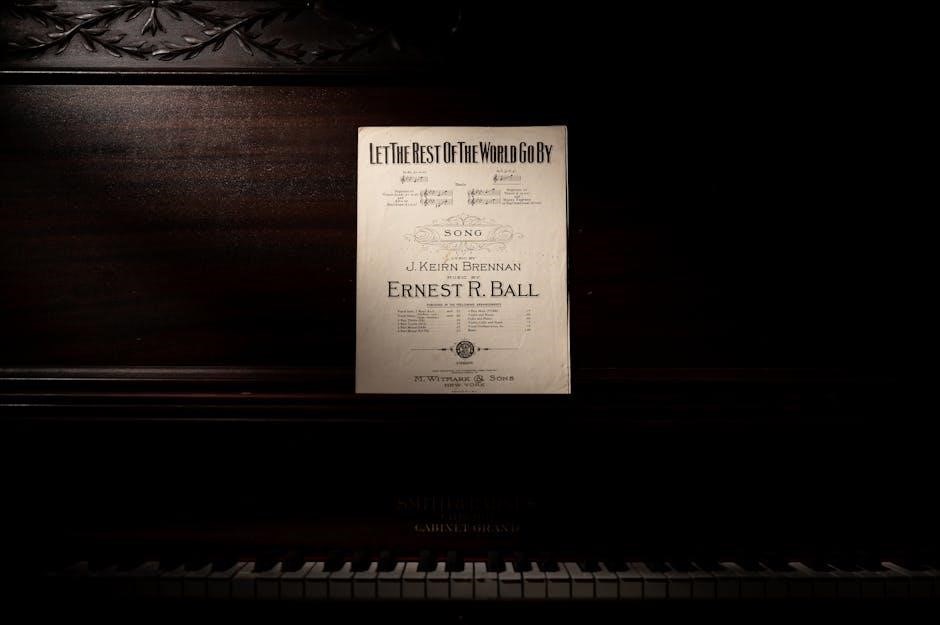
Learning Resources & Tutorials
Enhance your learning with online piano tutorials and demonstrations specifically for “Carol of the Bells,” alongside free sheet music from platforms like Pianote and YouTube.
Online Piano Tutorials for Carol of the Bells
Numerous online resources cater to various skill levels, assisting pianists in mastering “Carol of the Bells.” Pianote stands out, offering both free sheet music and comprehensive tutorials designed to guide you through the piece. These tutorials often break down the song into manageable sections, focusing on rhythm, hand positioning, and proper technique.
YouTube is also a treasure trove of demonstrations and lessons. Search for “Carol of the Bells piano tutorial” to find a wide array of videos, from beginner-friendly walkthroughs to more advanced interpretations. Many instructors visually demonstrate finger placements and offer helpful tips for tackling challenging passages. Utilizing these resources alongside your sheet music can significantly accelerate your learning process and improve your overall performance.
Pianote: Free Sheet Music and Tutorials
Pianote provides a valuable resource for learning “Carol of the Bells” on the piano, offering free sheet music alongside dedicated instructional videos. Their approach focuses on breaking down the song into accessible parts, making it suitable for a range of players. The tutorials emphasize not just playing the notes, but understanding the musicality and phrasing of the piece.
Users benefit from clear visual demonstrations of hand positions and fingerings, coupled with explanations of the underlying musical concepts. Pianote’s materials are designed to build confidence and technique, allowing pianists to progress steadily. This combination of free sheet music and guided instruction makes it an excellent starting point for anyone wanting to learn this beloved holiday classic.
YouTube Tutorials and Demonstrations
YouTube hosts a vast collection of tutorials and demonstrations for learning “Carol of the Bells” on piano, offering diverse approaches to suit different learning styles. Many videos provide step-by-step guidance, slowing down difficult passages and highlighting key techniques. Visual learners will appreciate the clear demonstrations of hand positions and fingerings.
Search for tutorials specifically geared towards beginner, intermediate, or advanced players to find content matching your skill level. Furthermore, some videos offer play-along tracks, allowing you to practice with accompaniment. YouTube provides a cost-effective and readily accessible way to supplement sheet music study and enhance your understanding of the piece, fostering a deeper connection with the music.
Printing and Formatting PDF Sheet Music
Ensure optimal print quality by verifying correct page sizing and adjusting print settings for clarity when using downloaded “Carol of the Bells” piano PDFs.
Ensuring Correct Page Size

When printing your “Carol of the Bells” piano sheet music PDF, accurate page sizing is crucial for readability and a professional appearance. Before hitting print, access your printer settings and locate the “Page Sizing & Handling” options. Select “Actual Size” or “100%” scaling to prevent the sheet music from being compressed or stretched.
Incorrect scaling can distort the notes, making them difficult to read and impacting your performance. Preview the print layout to confirm that the music fits neatly within the page margins. If the music appears cut off, slightly adjust the scaling percentage until it’s fully visible. Remember to test print a single page before printing the entire score to avoid wasting paper.
Proper page sizing ensures that the notes, rests, and other musical symbols are displayed accurately, allowing for a smooth and enjoyable learning experience with your “Carol of the Bells” piano arrangement.
Adjusting Print Settings for Clarity
To maximize clarity when printing your “Carol of the Bells” piano sheet music PDF, fine-tune your printer settings beyond just page size. Select a high print quality setting – often labeled “Best” or “High” – to ensure sharp lines and well-defined notes. Choose a paper type appropriate for music printing; heavier weight paper generally yields better results.
Consider printing in grayscale, even if your printer is color-capable, as musical notation doesn’t require color. Experiment with different contrast levels to find what provides the clearest distinction between the notes and the staff lines. Disable any automatic image enhancement features, as these can sometimes blur the details.
A test print is invaluable; review it carefully under the lighting conditions where you’ll be playing. Adjust settings as needed until the sheet music is easily readable, enhancing your learning and performance of this beautiful carol.